Some dance works ask you to follow choreography. Others ask you to notice space itself. Solos in Spaces, the thoughtful triple-bill created and performed by Japanese choreographer Akiko Ono, quietly does both.
Built around Gibson’s affordance theory — the idea that environments shape and invite particular forms of behaviour and movement — the work unfolds across three contrasting rooms: a stark white classroom, a black meditation chamber, and finally a luminous sculptural landscape filled with delicate floating forms by Tomoyo Hiraiwa.
What’s striking is how naturally the emotional tone changes with each environment. Ono doesn’t simply perform inside the rooms; she appears altered by them.
The first section, Gestures, uses a white clinical space where movement becomes tentative, exploratory, almost socially coded. Hands hover near walls. The body seems to negotiate permission. Even small motions feel loaded with meaning.
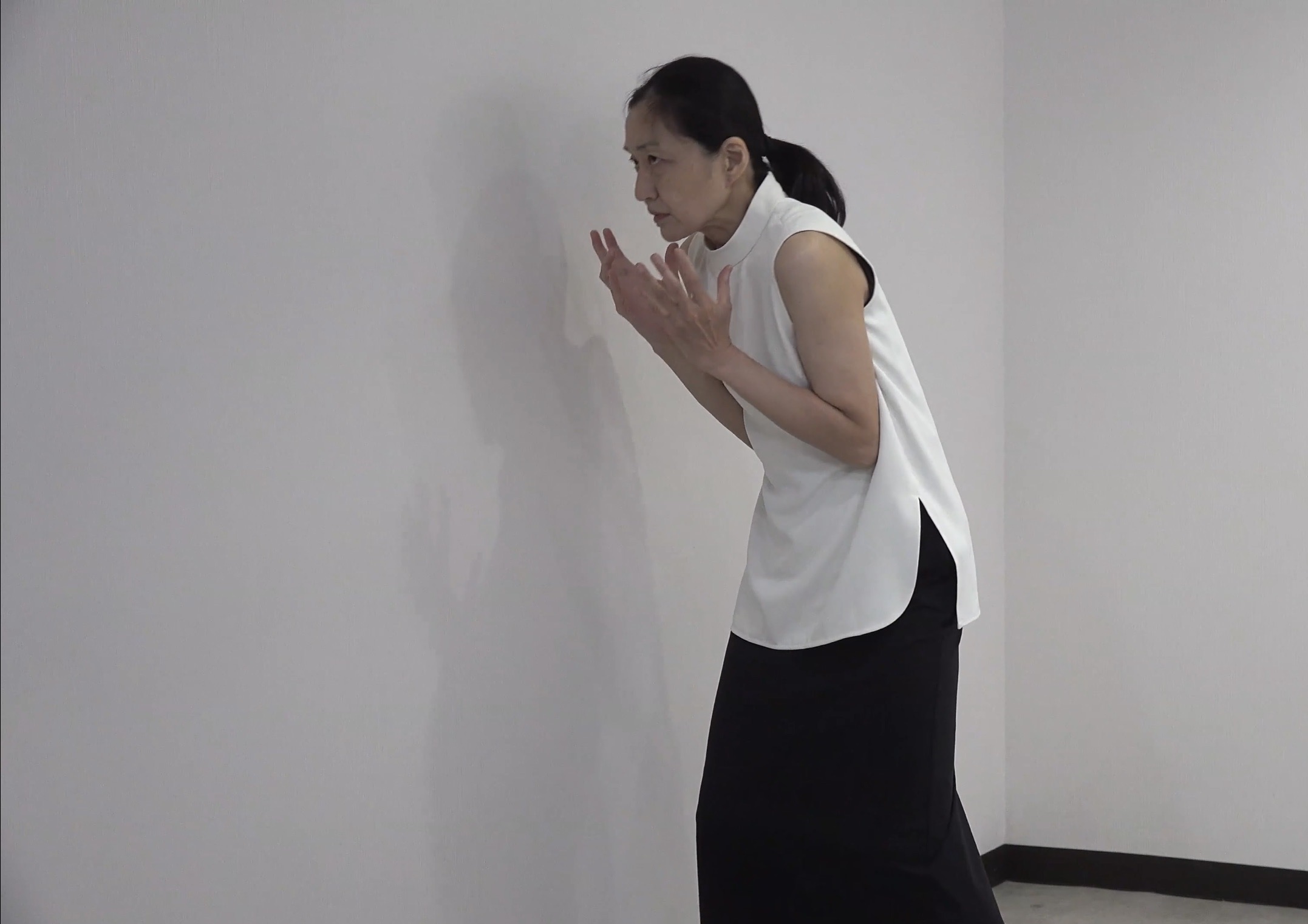
Akiko Ono’s movement seems shaped by the architecture itself — the body negotiating with space rather than dominating it.
Then the work moves into Meditation, set in a blackened room where the choreography becomes slower, riskier and more interior. There is remarkable restraint in this section. Ono allows stillness to do real work. Rather than filling the silence, she trusts the audience to sit within it. The result feels less like performance and more like witnessing thought passing through a body.
One of the most affecting aspects of the piece is how clearly emotion appears to live in posture and orientation rather than overt expression. A tilted head, a paused shoulder, a seated position held slightly too long — these become emotional states in themselves.
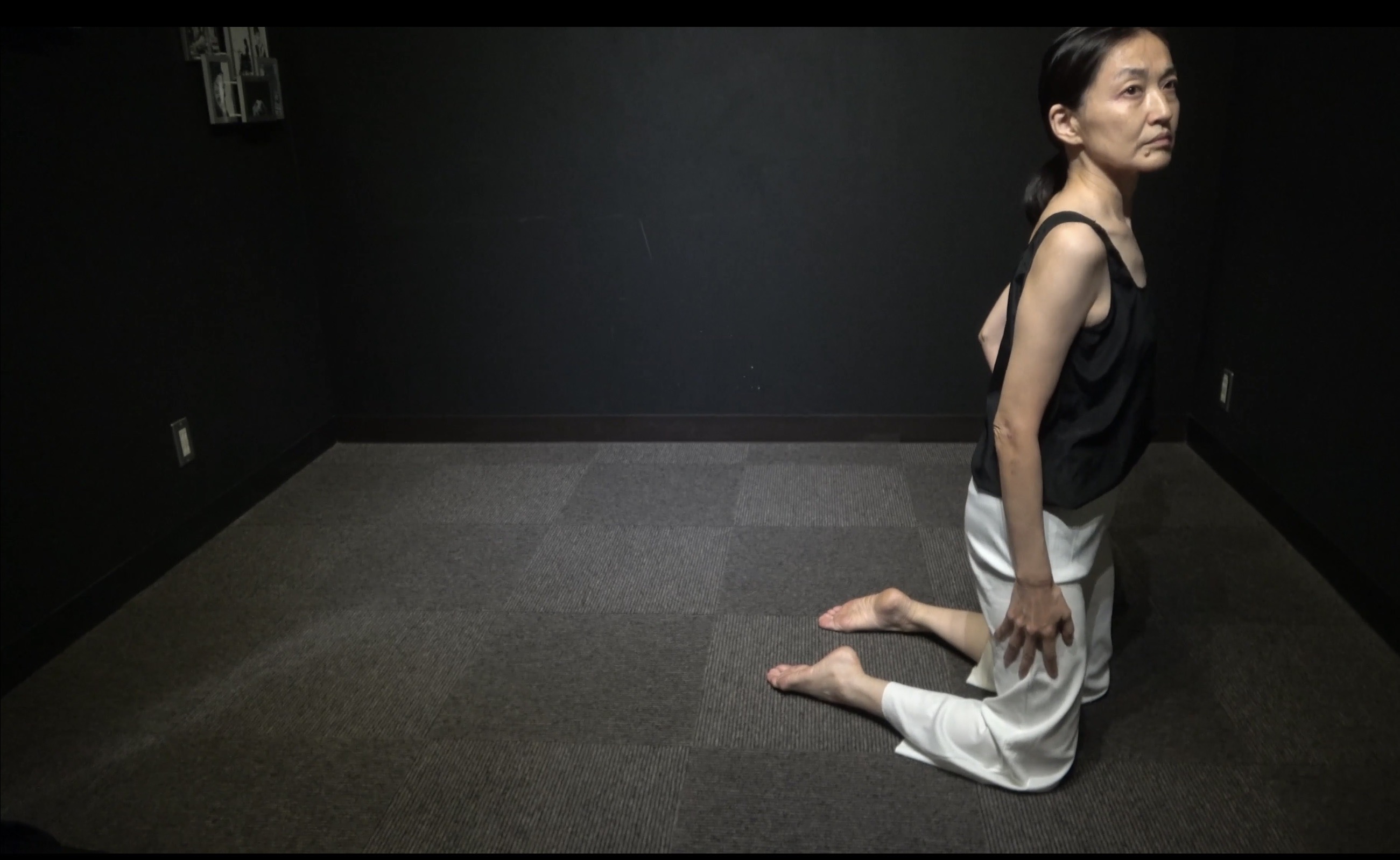
Stillness becomes choreography in the black room sequences, where emotional shifts emerge through breath, posture and duration.
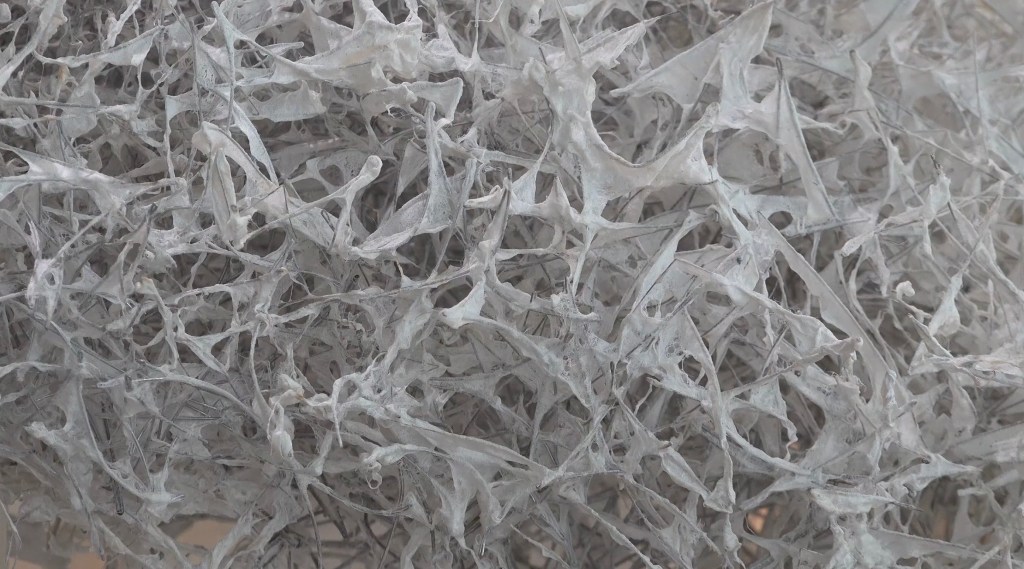
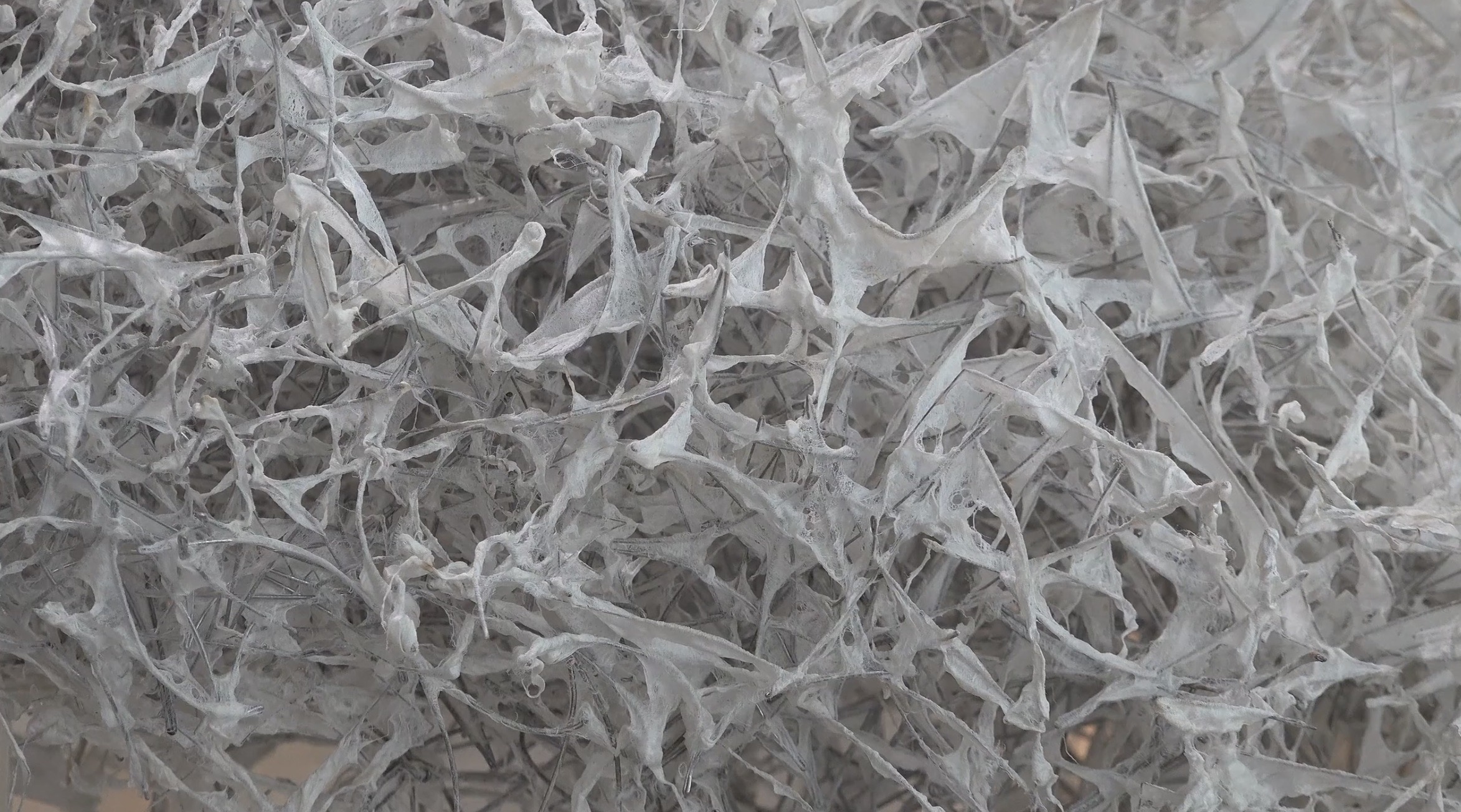
The final section, The Bottom of the Sea, introduces floating sculptural forms that drift around Ono like suspended memories or fragments of thought. Here the body finally expands outward. After the earlier restraint, the movement gains release and openness, while still carrying traces of the earlier rooms — as though environments leave residues inside us even after we move on.
That lingering quality gives the work unusual depth. It becomes not only a study of movement, but a study of how people absorb spaces psychologically and physically.
There’s also something here that resonates strongly with contemporary medical humanities and care discussions. Environments are never neutral. Rooms shape behaviour. Institutions shape expression. Certain gestures become possible in one setting and impossible in another. The work quietly asks what happens to human expression when spaces become restrictive, clinical, isolating or over-controlled — and what remains afterwards.
The sculptural final images are especially beautiful because they feel simultaneously fragile and alive.
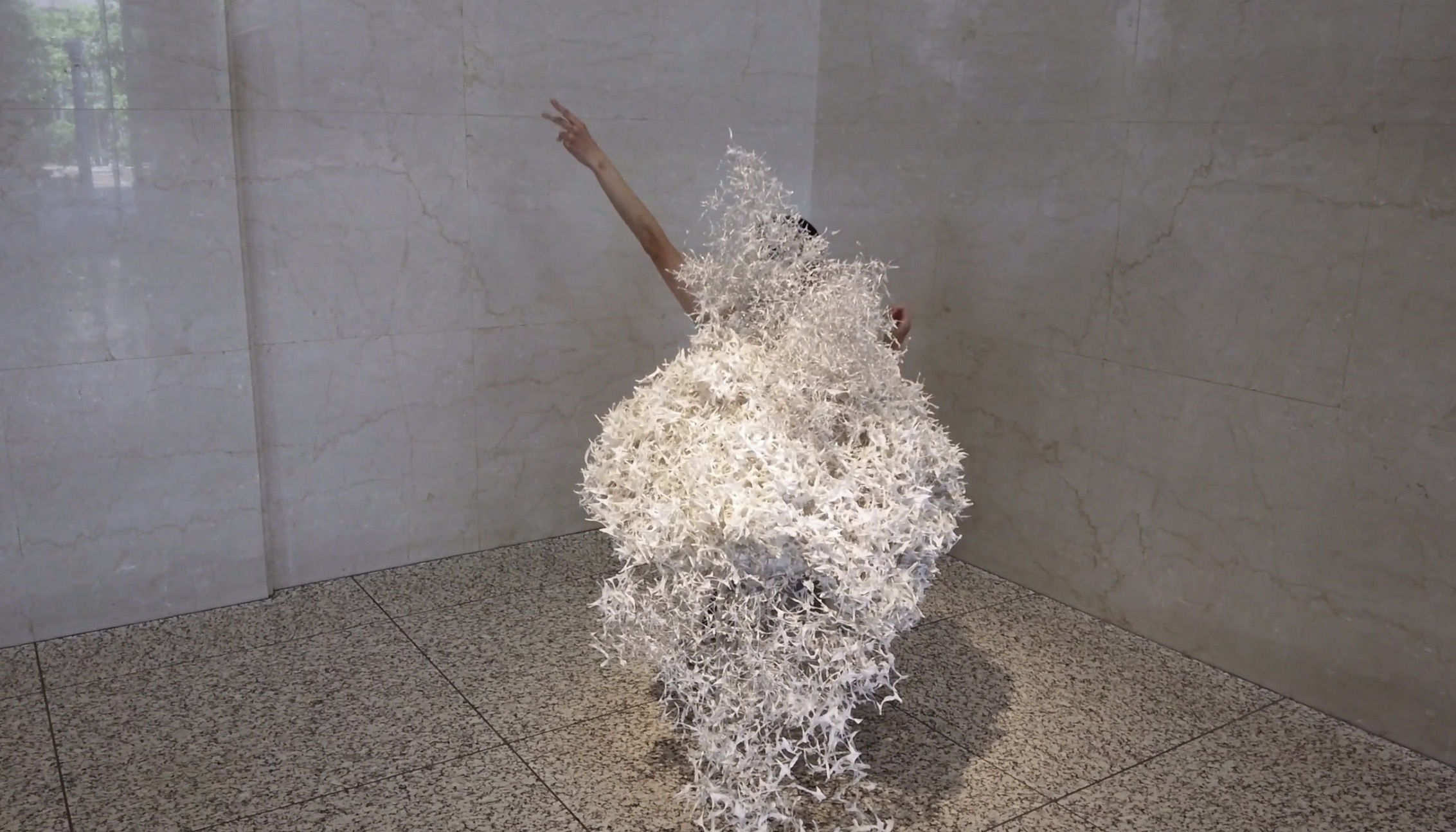
Floating sculptures and slow movement create a final sequence that feels suspended somewhere between memory, therapy and dream.
What makes Affordances compelling is its refusal to over-explain itself. It trusts viewers to bring their own histories and associations into the rooms. Some may experience it as contemporary dance, others as installation art, meditation, or even emotional cartography.
Either way, it lingers.


Leave a comment