C Venues Digital
Created by Nigel Barrett and Louise Mari
One of the most striking things about this digital response to High Rise is how completely it belongs to the lockdown moment it was made in — not as a gimmick, but as part of the emotional architecture of the piece itself.
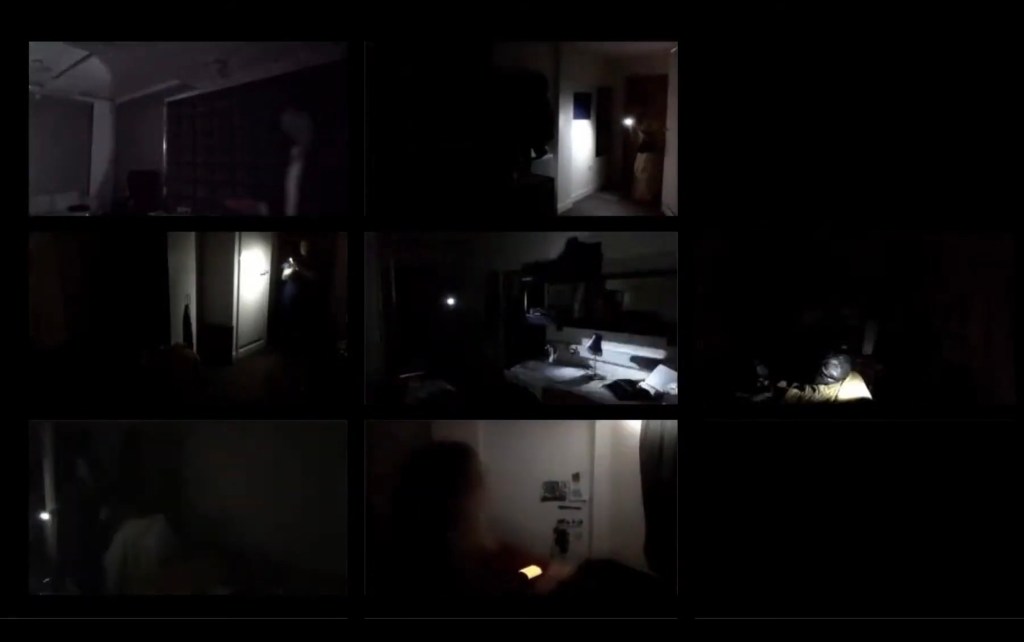
Performed across a grid of screens, the production turns isolation into both form and subject. Characters sit boxed inside their own rooms, apartments and social positions, watching each other while struggling to be heard themselves. The effect is immediate and oddly intimate: lives unfolding side by side, close together yet emotionally miles apart.
Inspired by J G Ballard’s dystopian world, the piece reimagines the tower block as a miniature society where class, access and power quietly calcify floor by floor. Those living at the top enjoy status and influence, while residents lower down face deteriorating services, neglected spaces and a growing sense that their complaints no longer matter. One detail lands particularly well: the lower floors are left without carpeting on the stairwells while lifts fail and maintenance slips away — small indignities becoming symbols of wider inequality.
There’s also an unsettling thread running through the work around speech and suppression. A writer character attempts to hold onto honesty within the building’s increasingly controlled atmosphere, while a television journalist struggles with whether anyone really wants to hear difficult truths at all. The piece keeps asking who gets listened to, who gets protected and who quietly disappears beneath systems designed to maintain appearances.
A line late in the play lands with real force:
“You’re no better than me. You just got lucky.”
It cuts directly through the illusion of social superiority the building tries to maintain.
What makes the production especially impressive is the sheer coordination and commitment involved. Created remotely during Covid restrictions, with performers working across the UK, Croatia and India, the show could easily have felt technically fragmented. Instead, the cast work together with remarkable precision and energy. The climax is genuinely gripping, with the actors feeding off one another’s momentum despite the physical distance between them.
The digital format also becomes part of the storytelling in a clever way. Watching faces framed inside separate squares begins to feel less like a Zoom limitation and more like a comment on modern urban life itself — people stacked together, observing one another through screens, carrying private frustrations behind closed doors.
The recurring nine-screen structure becomes one of the production’s strongest ideas. Characters appear trapped inside separate digital compartments — watched, isolated and emotionally compressed — yet still connected by the architecture of the building itself. In one particularly striking sequence, distorted red-toned imagery turns the residents into almost spectral figures, their faces dissolving into static and shadow. It feels less like conventional theatre and more like a communal nervous system under pressure.
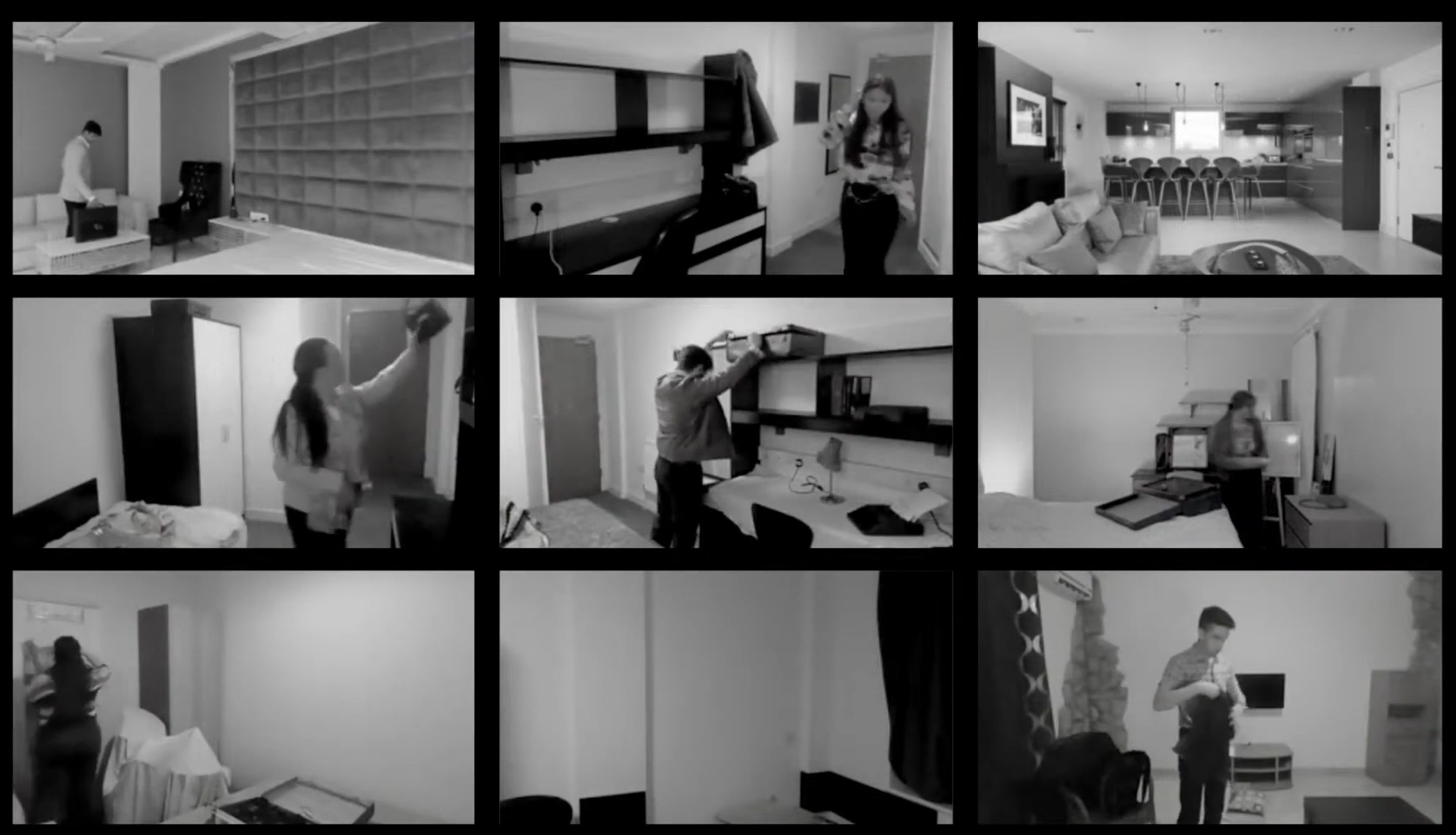
Later sequences shift into darkness, with residents moving through dim apartments carrying phone torches and small pools of light. The visual effect is simple but deeply effective: people searching for orientation inside systems that no longer fully support them. Even across digital screens, the production creates genuine suspense and an eerie sense of social collapse unfolding room by room.
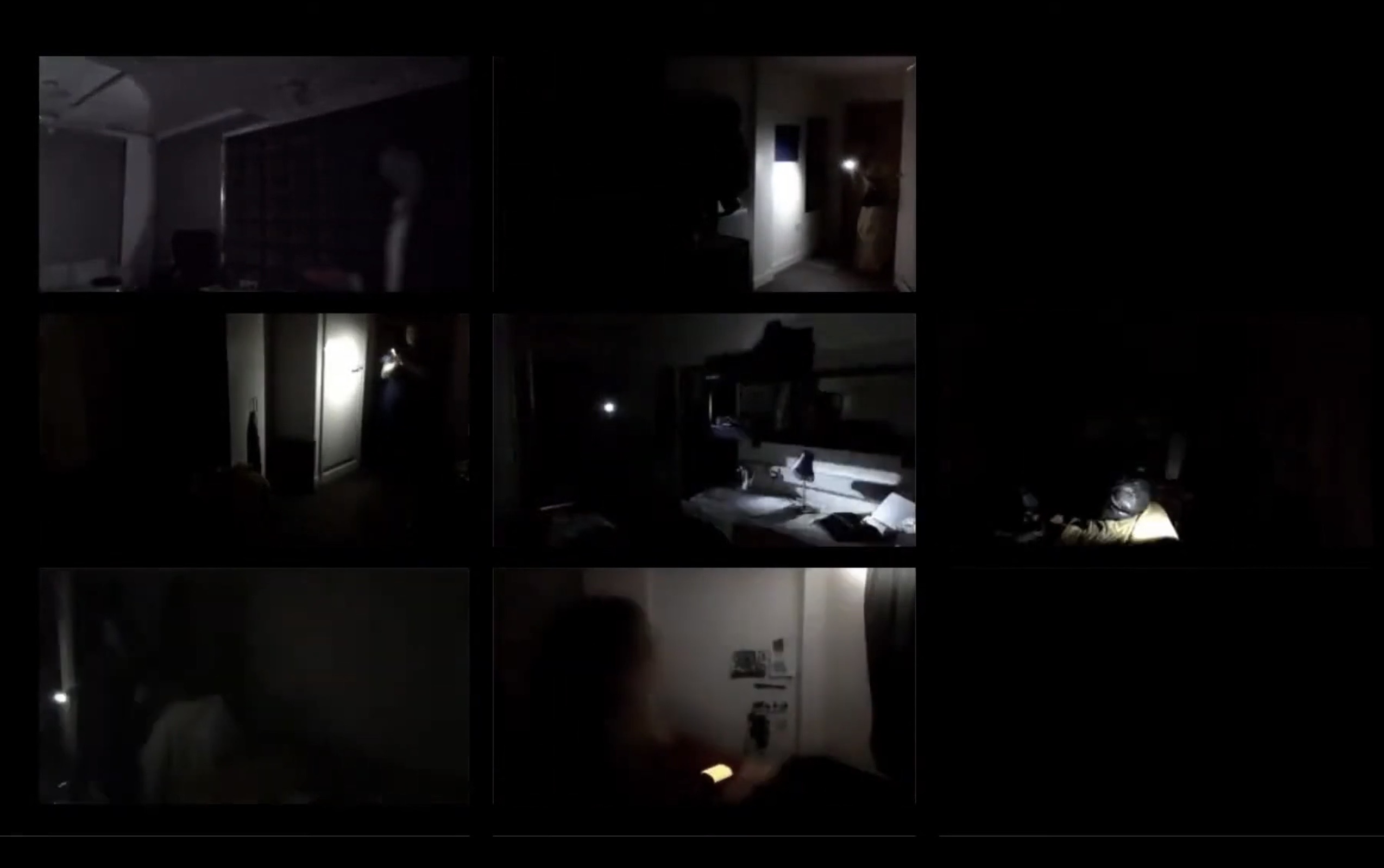
One of the most quietly powerful visual choices comes through the contrast between the apartments themselves. Some rooms feel sparse and temporary; others open into expansive, polished interiors high above the city. By presenting all the residents simultaneously in equal-sized boxes, the production subtly exposes the illusion of equality inside unequal systems. Everyone occupies the same grid — but not the same world.
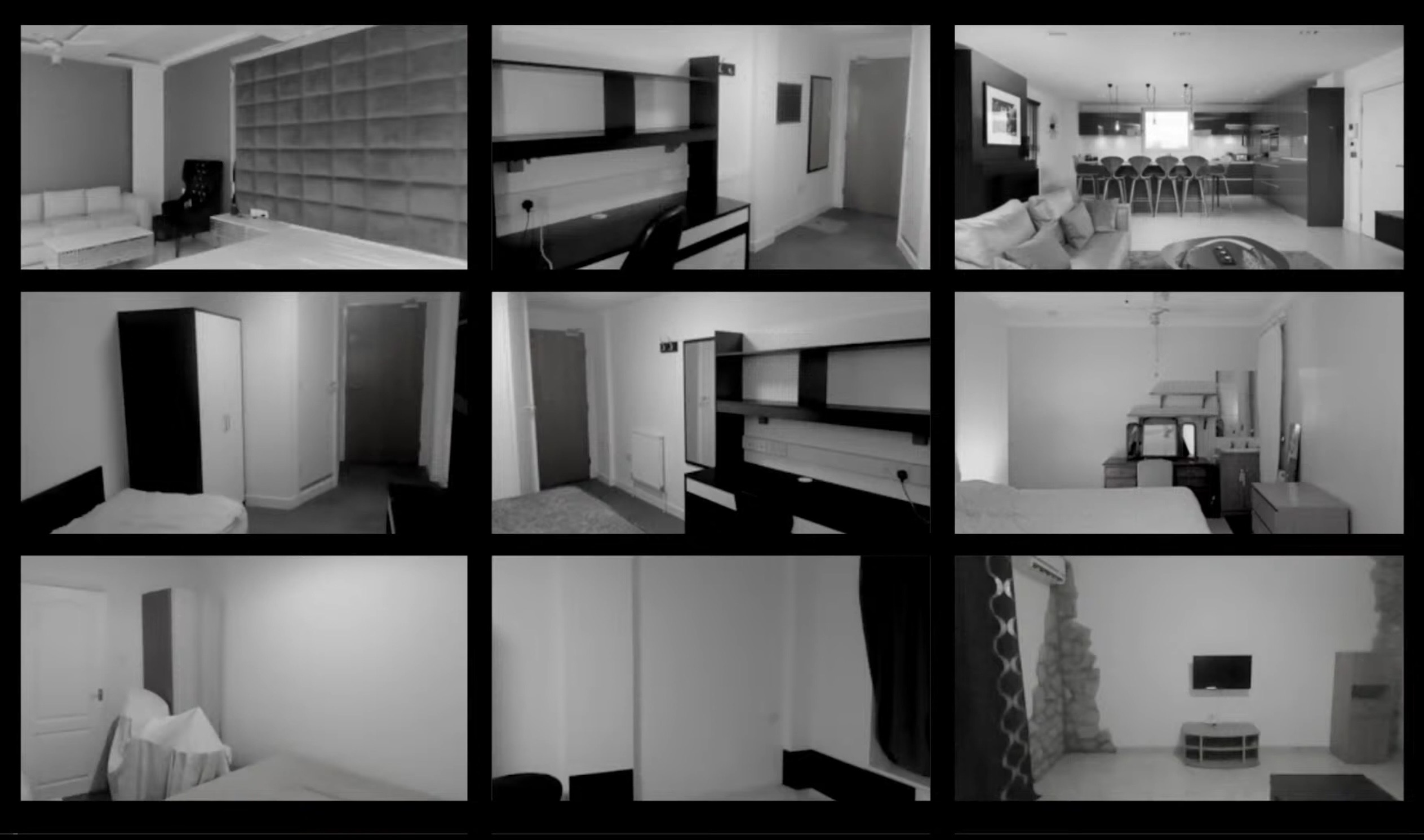
The visual language of the production becomes part documentary, part dystopian collage — capturing not just lockdown isolation but the emotional architecture of modern housing itself.
For all its political themes, High Rise never loses its emotional pulse. Alongside the anger and tension there is sadness too: about aspiration, about isolation and about the pressure to keep climbing even when the structure itself is beginning to crack.
Sharp, inventive and surprisingly human, this is digital theatre that understands exactly what its form can say.


Leave a Reply