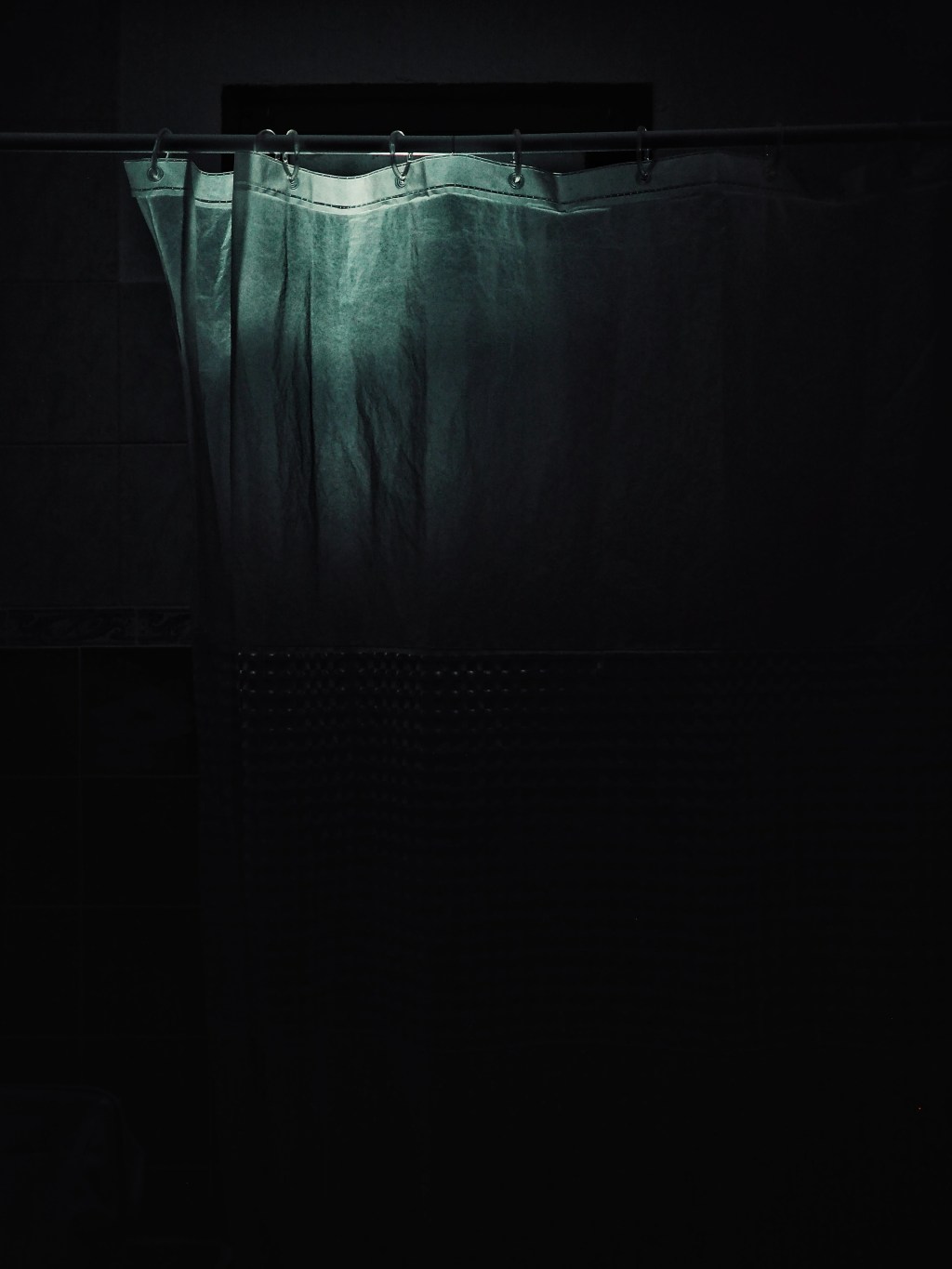
Olivia Plender, Little Fennel’s Complaint, and Kira Freije, Unspeak the Chorus, Modern Art Oxford, 23 May – 16 August 2026

Every exhibition tells a story. This one is about who gets to tell theirs — and who gets believed when they do.
The title does its work before you’re through the door. A complaint is a medical condition; a complaint is also the act of complaining. Plender has said she was playing deliberately with that double meaning — the way a woman describing real symptoms can be reheard as a woman making a fuss. Nagging. Whining. Hysterical. The exhibition sits inside that gap between what women say about their bodies and what medicine has historically chosen to hear.
The show opens not with an object but with a room. Plender has shaped the first space after the architecture of hospital waiting rooms — and it is worth pausing on what she does with it. A waiting room is usually a place of suspension: you are neither ill nor treated, only held. Here the holding is given room to breathe. The composition leaves space — actual, physical space — around each thing, so that you slow down before you have looked at anything at all. It felt less like being processed and more like being allowed to arrive.
The cold white of the partition walls hit first, a clinical chill that immediately brought to mind the quiet, low-level dread of waiting for bad news. Yet, as the hum of the street outside died away, the vast patches of empty floor felt less like institutional neglect and more like a deliberate intake of breath.
Plender’s method is research made visible. She has drawn on the Bodleian Library, Oxford Botanic Garden and the John Radcliffe, and on the seventeenth-century casebooks of Richard Napier — an astrologer-physician whose methods no one is asking us to revive. What interests Plender about Napier is stranger and more uncomfortable: whatever we make of his astrology, his practice required him to sit with patients, listen at length, and write down what they told him. Four hundred years later, many women describe medical encounters where precisely that — being listened to, being recorded accurately, being believed — is what’s missing. The exhibition never says “things were better then.” It asks something sharper: what did medicine gain in scientific precision, and did it mislay the art of attention along the way? Whatever else has been gained, the thing the room keeps returning you to is the simple act of being listened to at length — and how rarely that now feels like part of the medicine.
Then there are the plants. Fennel, fern, parsley — and silphium, a relative of fennel used since antiquity to end pregnancies, harvested so thoroughly in the ancient world that it was driven to extinction. Plender’s watercolour series Bringing Down the Flowers takes its name from the old euphemism for inducing abortion with herbs, and paints these plants in the genteel style of nineteenth-century flower studies — a disguise that is part of the point. These aren’t decorative botanical studies. They are a record of knowledge women carried, shared and were punished for — the show reaches back to the Malleus Maleficarum‘s fantasies about midwives and witches, reimagined here in a large embroidered textile.
The massive hanging textile dominates the back wall like a dark tapestry from an ancient hall, its deep, bruised indigo threads catching the low light and holding you before the raw, jagged shapes of figures accused and isolated.
What keeps the show from becoming a lecture is that Plender resists heroes and villains. Modern medicine’s achievements aren’t denied; the hysterical-woman archetype isn’t pinned on any one era or profession. There is a generosity in how the show withholds its verdict. It would have been easy to make this an indictment; instead Plender leaves the questions standing and trusts you to sit with them. That trust is the exhibition’s quiet argument about care — that attention, real attention, means not rushing someone toward a conclusion. The questions are simply left in the room with you: whose knowledge counts as knowledge? What happens to the things a culture decides to forget?
Near the Bodleian manuscripts, an older woman stood entirely motionless for nearly ten minutes, leaning so close to the glass case that her breath lightly fogged the description of a seventeenth-century woman’s “grief and silent tears,” nodding softly as if recognising a conversation she had only recently finished having herself.
If I have a reservation, it’s whether the sheer volume of archival text on the lower gallery walls pushes the exhibition slightly too far into the realm of a library archive, demanding a level of intellectual stamina that occasionally disrupts the quiet, bodily pacing the rooms themselves so beautifully invite.
Upstairs, the building answers itself. Kira Freije’s Unspeak the Chorus fills the Upper Gallery with a mist-veiled room of life-sized figures, welded from steel and cast aluminium and draped in worn cloth, caught mid-gesture — a couple embracing, one figure drawing another upright from a collapse, another leaning close as if mid-whisper. Their eyes are closed. Where Plender’s rooms are about being seen wrongly, or not at all, Freije’s are about holding and being held without needing to be looked at. You don’t observe this room so much as end up inside it.
Stepping into the upper gallery is like walking directly into a cool morning fog where the world has slowed to an absolute crawl. Up close, the rusted welds on the steel joints give the figures a heavy, scarred fragility; they look like people who have survived a great collapse, not by standing strong alone, but by leaning their full, dead weight into one another.
It is worth saying that the two shows were made separately and only happen to share a building and a season — but they read as one argument in two registers. Plender shows what it costs to be reduced to a case; Freije shows what it looks like to be recognised as a person. Between the diagnostic waiting room downstairs and the fog of quiet kinship upstairs, Modern Art Oxford has, half by accident, staged something about care itself: that being attended to is not a luxury laid on top of treatment but part of what makes a person whole again. Neither show says this out loud. Together they don’t need to.
The exhibition’s real achievement is an old storyteller’s trick: it makes the past feel like a draft of the present. The women in Napier’s casebooks, the midwives in the woodcuts, the patient today rehearsing her symptoms in the waiting room so she’ll be taken seriously — Plender lets you see them as chapters of one continuing story. Stories about women’s bodies have always been written by someone. This show asks, quietly and insistently: by whom — and when does she get the pen?
Little Fennel’s Complaint and Unspeak the Chorus run at Modern Art Oxford until 16 August 2026. Tickets £6/£9/£12, available on the day at the Welcome Desk or in advance online.



Leave a Reply