There’s a particular kind of morning that only exists during the Fringe: the streets still quiet, the posters still slightly damp from last night’s rain, everyone you pass looking as though they’re carrying at least one show inside them they haven’t quite recovered from yet.
This week’s picks wander through history, ancestry, absurdism, Shakespearean carbohydrates and the clowning of old age itself. Different rooms, different hours, different forms — but all of them asking, in their own way, what it means to be seen. Or mis-seen. Or named incorrectly. Or recognised only when wearing a hat, holding a croissant, or bleeding metaphorically into the microwave.
The Fringe, at its best, arriving not as a theory but as a man with a song, a story and possibly a shot glass.
Bloody Mary(s) — Blue Fire Theatre Company
There’s something quietly brilliant about a show that takes one of the most common names in history and asks us to sit with all its ghosts at once.
Blue Fire Theatre Company — the team behind Fringe hit Chopped Liver & Unions — turn Bloody Mary(s) into an interactive walk through the Marys, Mariams and Marias who have shaped news, faith, folklore and popular culture, from Mary Quant to Mary Poppins. A name becomes less a label than a waiting room. Who has been called in? Who has been left outside?
“Which Mary would you invite to dinner?” is a lovely, disarming way of asking who we actually remember, and why.
Also: never underestimate a show that begins with a name and ends with a haunting. That is basically the whole of history, but with better lighting.
Gerry Carroll: Young — Gerry Carroll, Just the Tonic
This is the one I keep coming back to on paper alone.
Gerry Carroll is 73, and Young is his solo show about the Irish legend of Oisín — the warrior-poet who rides off to the Land of the Young, returns three years later, and ages instantly the moment his foot touches ordinary ground.
Carroll folds that myth into his own life story, with clowning, song, dance and, apparently, shot glasses. There is something moving about watching someone use comedy to explore what it means to get old slowly, rather than all at once like Oisín did. Most of us are not flung from myth into mortality in one dramatic fall. We notice it in knees, keys, names, stairs, mirrors, apps we did not ask for, and the sudden violence of a young person saying “no worries” when they absolutely should be worrying.
Ageing is often discussed as decline, burden, demographic problem. Theatre can do something different. It can put a living body in front of us and say: here, look, this is time speaking. It has jokes. It has rhythm. It may still dance.
Stop Playing Jacob’s Ladder With My Spine — HotCat Collective, Teatro Fisico at Fruitmarket
Not for the faint-hearted, and not trying to be.
HotCat Collective’s new piece blends absurdist theatre, contemporary dance and creative captioning into something about domestic chaos, sterilisation and the loss of control: ants in drawers, blood on food, a microwave as co-star. It sounds like a fever dream, which at the Fringe is not necessarily a warning. Sometimes it is a map.
The title alone does half the work. Stop Playing Jacob’s Ladder With My Spine is funny, violent, childish, bodily and theological all at once. A spine is a structure. A ladder is a game. A body becomes architecture, toy, warning signal. There is a medical humanities essay hiding in there wearing glitter and shouting from the cutlery drawer.
Shakespeare for Breakfast — C theatre
A genuine Fringe institution, running since 1992, which in Fringe years might as well be a millennium. Empires have risen and fallen in less time. Whole careers have been launched, derailed, relaunched and reviewed by someone eating a flapjack.
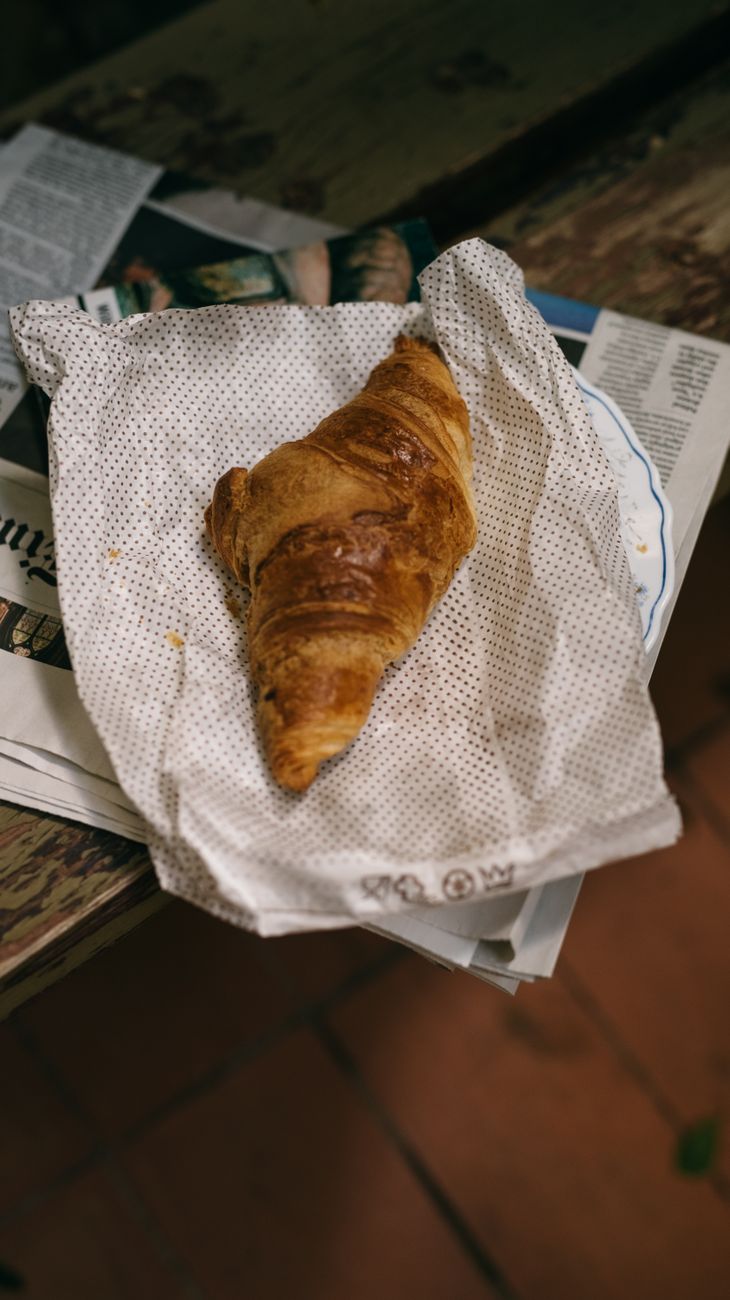
Shakespeare for Breakfast offers croissants, coffee and a sketch-style Shakespearean send-up, built for both hardened Bard fans and people who have never read a word of blank verse and have no intention of starting before 10am.
Either way, free pastries at 10am is a low-risk, high-reward way to start a Fringe day. If theatre cannot occasionally come with coffee and a baked good, what exactly was civilisation for?
Teatro Fisico / Tom Corradini Teatro — Fruit market
Sometimes the thing worth finding at the Fringe is not only a show, but a doorway.
Teatro Fisico at Fruitmarket feels like one of those doorways: a space dedicated to physical theatre, clown and Lecoq-inspired performance, with Tom Corradini Teatro bringing work that crosses language through the body. This is always one of the small miracles of physical theatre. You do not need to understand every word when the body has already told on itself.
There is something quietly radical about that. We live in a culture that keeps asking people to explain themselves, caption themselves, diagnose themselves, justify themselves, produce the correct vocabulary for their own experience. Physical theatre begins somewhere else. A shoulder drops. A foot hesitates. A face rearranges the room. Meaning appears before language has had time to tidy it up.
So yes, go for the individual shows. But also go a little afoot. Follow the venue trail. Find the rooms where language loosens and the body takes over.
Physical theatre gives us a different grammar of recognition: not “tell me who you are”, but “let me witness how you move through the world”.
That feels especially apt at the Fringe, where half the audience is jet-lagged, over-caffeinated or emotionally ambushed by a show they booked because it was near lunch.
The Fringe is full of people talking. It is worth making time for the artists who can make a silence trip over a chair and somehow tell you everything.


Leave a comment